Categories: AI Video Workflow, Creator Strategy, Production Process
Tags: veonano, ai creation studio, ai video workflow, content strategy, creator toolkit
Introduction
A video usually blows up after several small signals stack together: a clear first-second promise, enough retention to justify a wider test, packaging that earns the click, and a follow-up plan that converts one spike into repeat audience memory.
Use this guide as a production playbook for VeoNano. Build several controlled variants around the same idea, publish with different hooks and packaging, then keep the formats that produce measurable watch time, rewatches, saves, comments, or profile visits.
Viral Growth Framework
1) Decoding the Viral Algorithm What Platforms Really Want
Virality isn't random in the way it's frequently assumed. It's uneven, but it isn't mystical. A blow up video usually happens when a platform sees early signs that viewers will keep watching, interact, and move deeper into your content ecosystem.
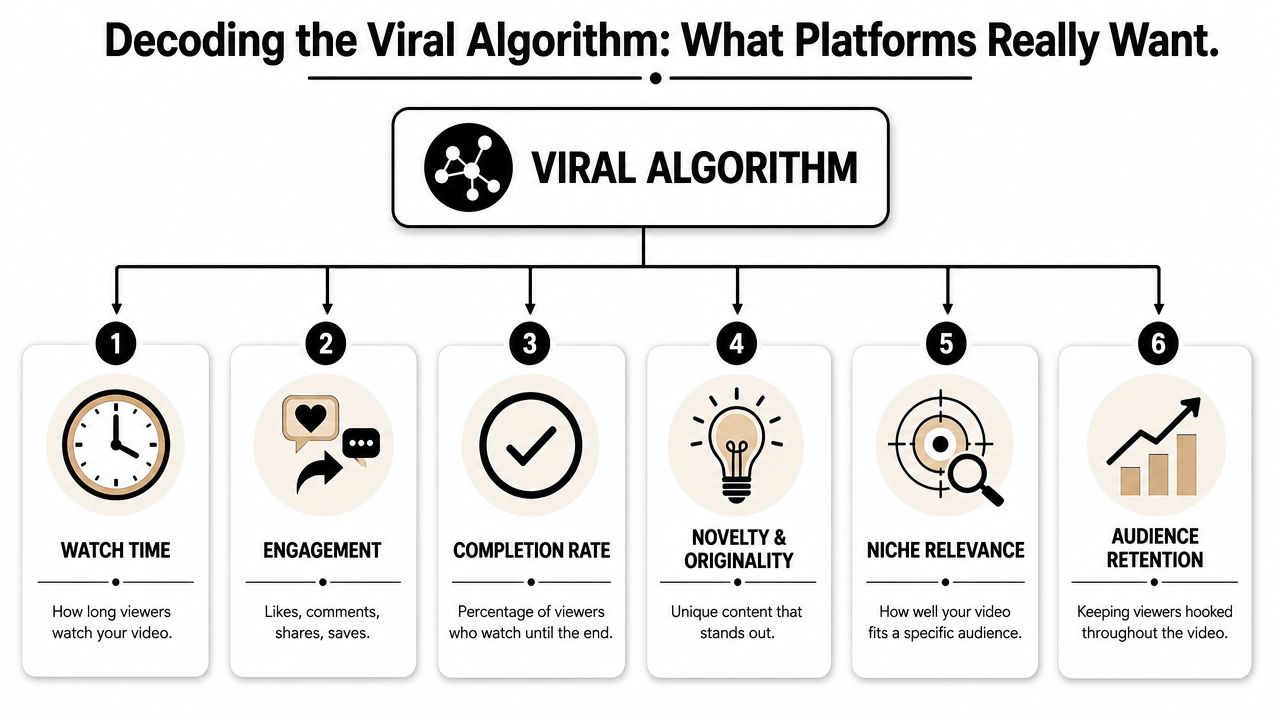
Treat early performance as evidence, not a verdict on the whole idea. If retention drops before the payoff, change the opening before changing the topic.
2) Crafting the Irresistible Hook and Proven Formats
When a creator says, "I optimized for keywords," that usually means they optimized for the wrong battlefield. Keywords matter more when someone already wants a specific answer.
In VeoNano, turn this into a controlled hook test: keep the same payoff, then vary the first frame, opening line, and pacing so the winner is tied to a visible creative choice.
3) Generate Viral Variants at Scale with VeoNano
TikTok, YouTube Shorts, and Reels all differ in details, but they share the same operating logic. They test content in waves. If viewers watch, rewatch, engage, or continue into more of your content, the system gains confidence.
Use this block to create one measurable variant in VeoNano, then compare it against a baseline instead of judging it by taste.
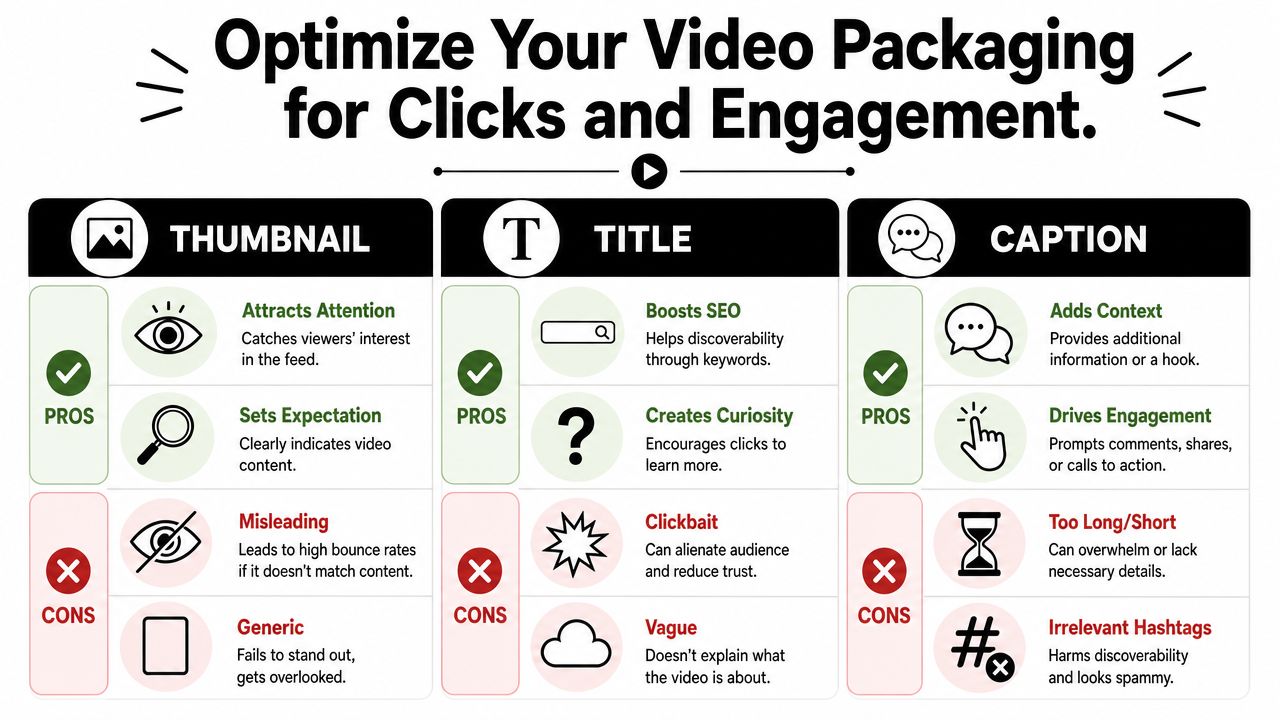
4) Optimize Your Video Packaging for Clicks and Engagement
Platforms don't promote videos because they seem promising. They promote videos because viewers produce measurable proof. That's why viral growth feels sudden from the outside. The audience sees the expansion late. The system saw the signal early.
Package the same clip for each channel with a platform-native caption, thumbnail frame, and first-second visual. The creative idea stays stable while the wrapper adapts.
5) Strategic Distribution and Niche Growth Hacks
The first seconds decide whether your video gets tested further or buried. Creators often treat the hook like a line of copy. It's not just copy. It's the contract. It tells the viewer what kind of payoff they're about to get and why they should care now.

Package the same clip for each channel with a platform-native caption, thumbnail frame, and first-second visual. The creative idea stays stable while the wrapper adapts.
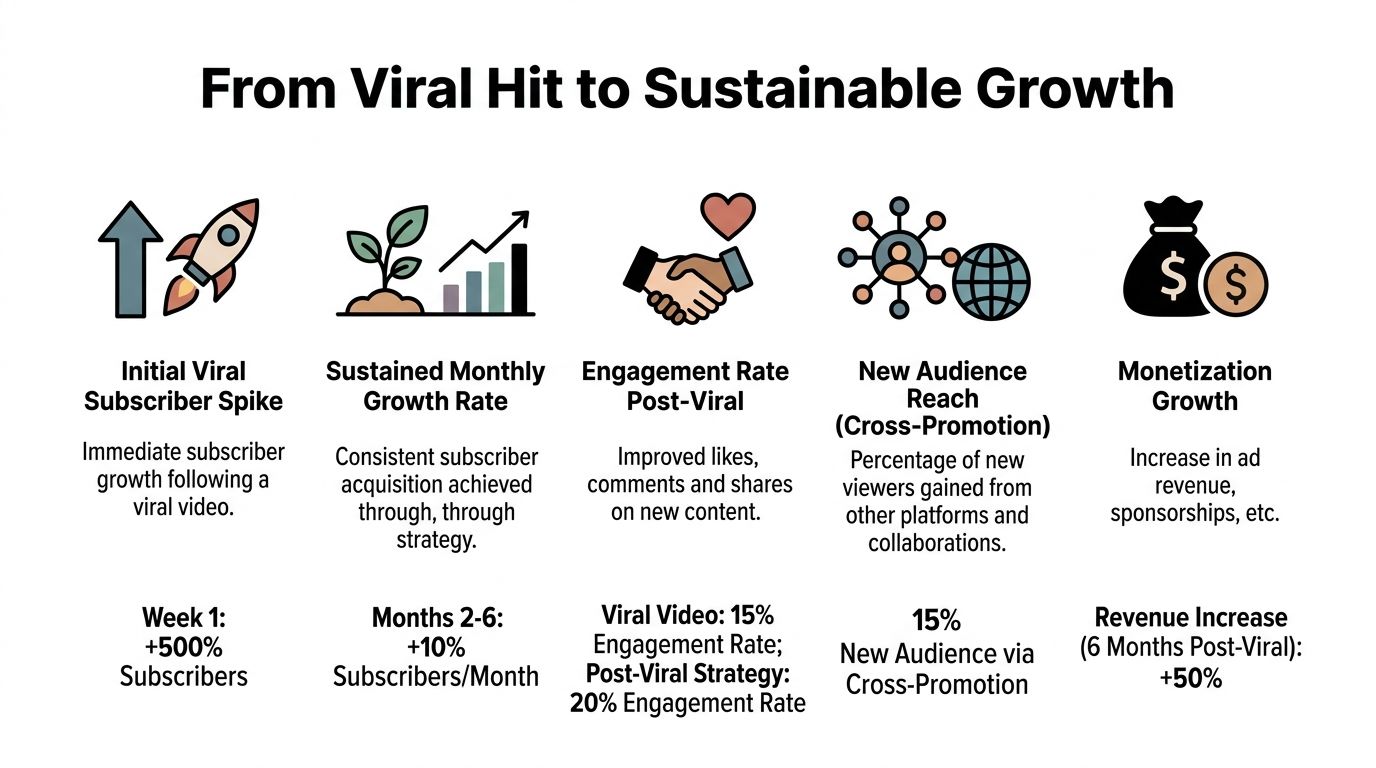
6) From Viral Hit to Sustainable Growth
Different niches need different tones, but the mechanics repeat.
Use this block to create one measurable variant in VeoNano, then compare it against a baseline instead of judging it by taste.
8) Passive discovery beats search for breakout growth
Creators often write the opening first and figure out the rest later. That usually produces weak retention. Reverse it. Decide the payoff, then design an opening that makes the payoff feel necessary.
Use this block to create one measurable variant in VeoNano, then compare it against a baseline instead of judging it by taste.
9) What platforms are actually testing
Most creators still test content like it's 2021. They hand-build one version, tweak it endlessly, post it, and call the result "market feedback." That's not testing. That's overcommitting to a guess.
Use this block to create one measurable variant in VeoNano, then compare it against a baseline instead of judging it by taste.
10) The algorithm rewards evidence, not potential
In post-production, "blow-up" also has a technical meaning. It refers to enlarging a smaller format frame to a larger one using software. That's now standard practice, and Filmmakers Academy notes that AI-driven up-scalers can exceed 85% success rates in that workflow.
Treat early performance as evidence, not a verdict on the whole idea. If retention drops before the payoff, change the opening before changing the topic.
Practical Weekly Workflow
- Pick one audience problem and write the payoff before writing the hook.
- Draft 3 hook variants: curiosity, contrast, and direct outcome.
- Generate or edit 2 to 4 visual versions in VeoNano with the same core promise.
- Package each version with a different title, caption, or thumbnail frame.
- Review early retention and engagement, then turn the best performer into a short series.
Conclusion
Viral reach is easier to repeat when it is treated as a test system. Keep the promise clear, make each variant meaningfully different, and use VeoNano to move from one lucky clip to a durable publishing pattern.
Next Step
Explore VeoNano workflow templates: https://veonano.com
FAQs
What should I test first when trying to blow up a video?
Start with the hook and the payoff. If viewers do not understand the reason to keep watching in the first second, stronger editing later in the clip will not rescue the post.
How many variants are enough?
For most short-form posts, 3 to 5 variants are enough to learn which angle is worth expanding. More variants only help when each one tests a clear creative difference.
Should I chase trends or build a repeatable format?
Use trends as distribution fuel, but keep a recognizable format. The repeatable format is what turns a single breakout into audience memory.