
Categories: AI Video Workflow, Creator Strategy, Production Process
Tags: veonano, ai creation studio, ai video workflow, content strategy, creator toolkit
Introduction
As Google transitions its multimodal capabilities toward the Omni family, developers and product teams face a period of transition. At VeoNano, we track these shifts to ensure your production framework remains stable. This guide breaks down what is currently known about the Gemini Omni API and how to prepare your architecture for the next wave of video generation tools.
Current Status: What is Officially Confirmed
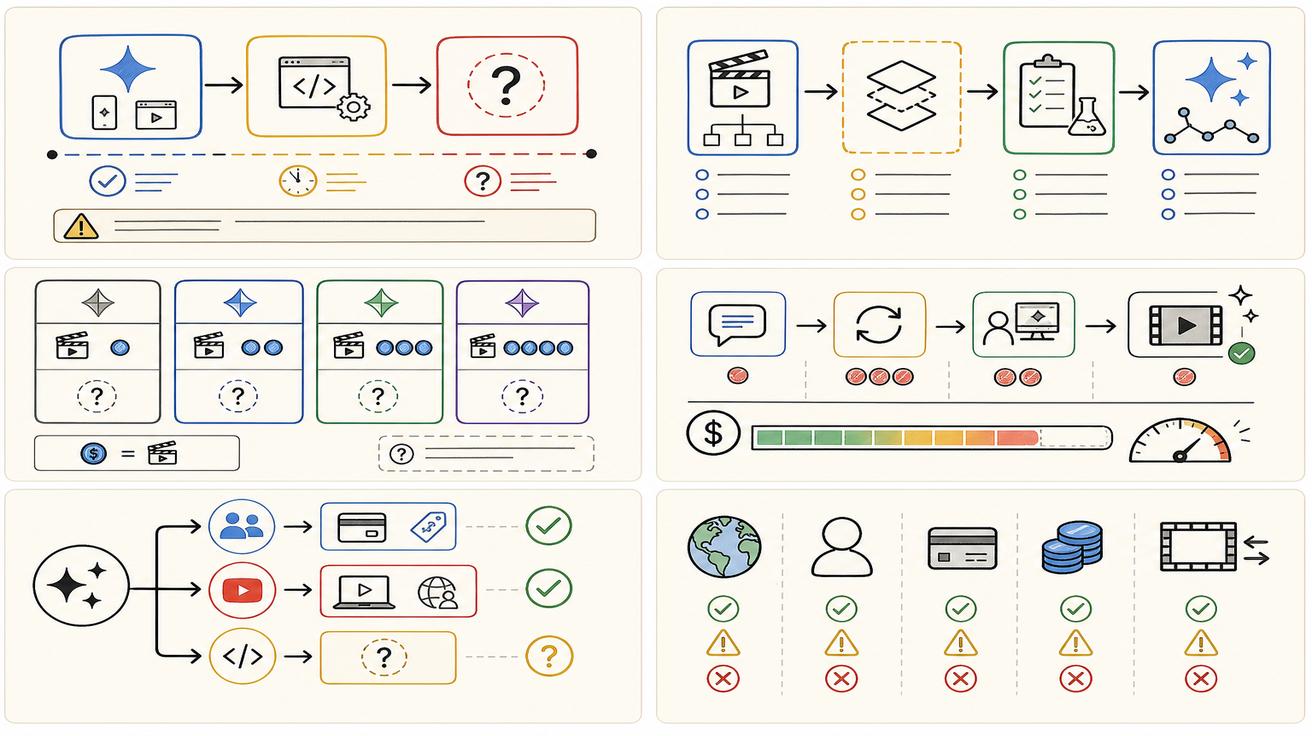
Google has confirmed that Gemini Omni Flash, the first model in this new family, is currently rolling out across the Gemini app, Google Flow, and YouTube Shorts. This marks the initial phase of public availability, focusing primarily on consumer-facing creative tools rather than a broad developer release.
The Developer Information Gap
While the consumer rollout is underway, several technical details remain unconfirmed for enterprise use. There is currently no public model ID for a production-grade Gemini Omni API, nor has Google released a comprehensive pricing table for API-based consumption. Developers should treat current documentation as preliminary until official model endpoints are published.
API Pricing Signals and Access
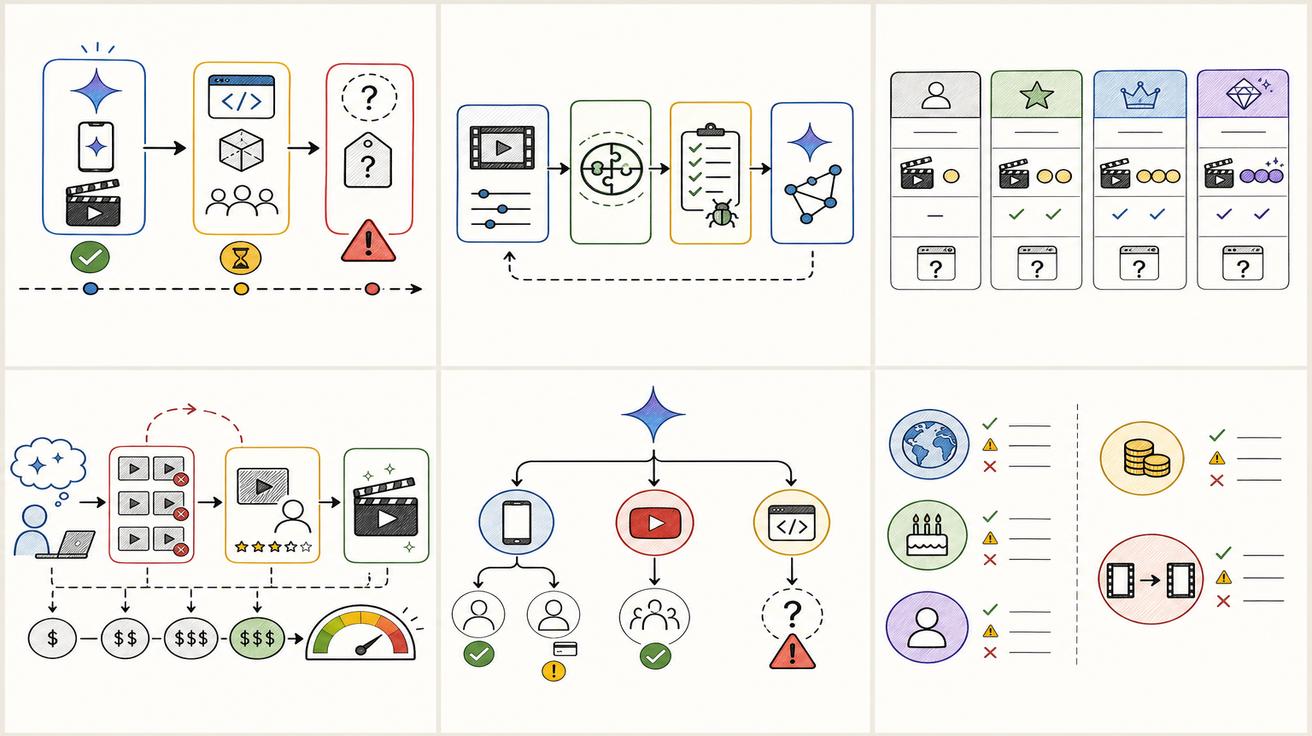
The pricing structure for Gemini Omni appears split between consumer tiers and developer usage. Current signals from Google AI subscription pages suggest that Free, Plus, Pro, and Ultra tiers will offer varying levels of access, with Flow credits serving as a primary value driver for paid plans. However, specific per-token or per-generation costs for the API itself have not yet been finalized.
Does Gemini Omni Replace the Veo API?
Google has stated that Gemini Omni will replace Veo within the Gemini app environment. It is important to note the "app" distinction; a change in the consumer interface does not necessarily mean that existing Veo APIs or specialized workflows will be deprecated immediately. For now, Veo remains a distinct entity in the developer ecosystem until a full API migration path is announced.
Safe Architecture While Waiting
To avoid technical debt, VeoNano recommends building a provider abstraction layer. By separating your application logic from specific model calls, you can pivot between Veo and Gemini Omni without rewriting your entire codebase.
Key components to abstract:
- Model IDs and prompt templates
- Output metadata and safety flags
- Retry logic and moderation filters
- Cost tracking and usage data
Migration Plan for Teams Using Veo Today
If your current workflow relies on Veo, your first step is to audit your dependencies. Determine if you are using the Gemini app, Google Flow, a direct Google Cloud API, or a third-party tool. This audit will help you assess the risk of service changes and identify which parts of your pipeline require the most flexibility.
What to Watch Next
The most critical signal for production readiness will be the release of a public Gemini Omni model page. This should include:
- Technical Specs: Model ID, request parameters, and supported input types (text, image, video, audio).
- Output Constraints: Maximum duration, supported aspect ratios, and regional availability.
- Operational Rules: Quota limits, safety controls, and final pricing.
Bottom Line
While Gemini Omni represents a significant leap in multimodal AI, the official details required for production-grade integration are still emerging. The best strategy is to remain "API-agnostic" while monitoring Google's developer documentation for the official model ID and pricing structures.
Implementation Sandbox
Once official documentation arrives, VeoNano suggests a phased integration:
- Internal Testing: Build a sandbox tool to test five core prompts: product shots, talking heads, app previews, image-to-video transitions, and video editing.
- Validation: Compare the output quality and cost-per-generation against your current Veo baseline.
- Gradual Rollout: Do not shift customer traffic until you have validated the API's reliability under load.
FAQs
1) Is the Gemini Omni API available for production today?
No. While Gemini Omni Flash is rolling out to consumer apps like YouTube Shorts, a production-ready API with a public model ID and pricing has not yet been released.
2) Will my existing Veo prompts work with Gemini Omni?
While many prompt structures will carry over, Gemini Omni’s multimodal nature may allow for more complex inputs. You should plan to re-test and optimize your prompt library once the API is accessible.
3) How should I prepare my infrastructure for this change?
The most effective preparation is to implement an abstraction layer that allows you to swap model providers without disrupting your core application logic.