Categories: AI Video Workflow, Creator Strategy, Production Process
Tags: veonano, ai creation studio, ai video workflow, content strategy, creator toolkit
Introduction
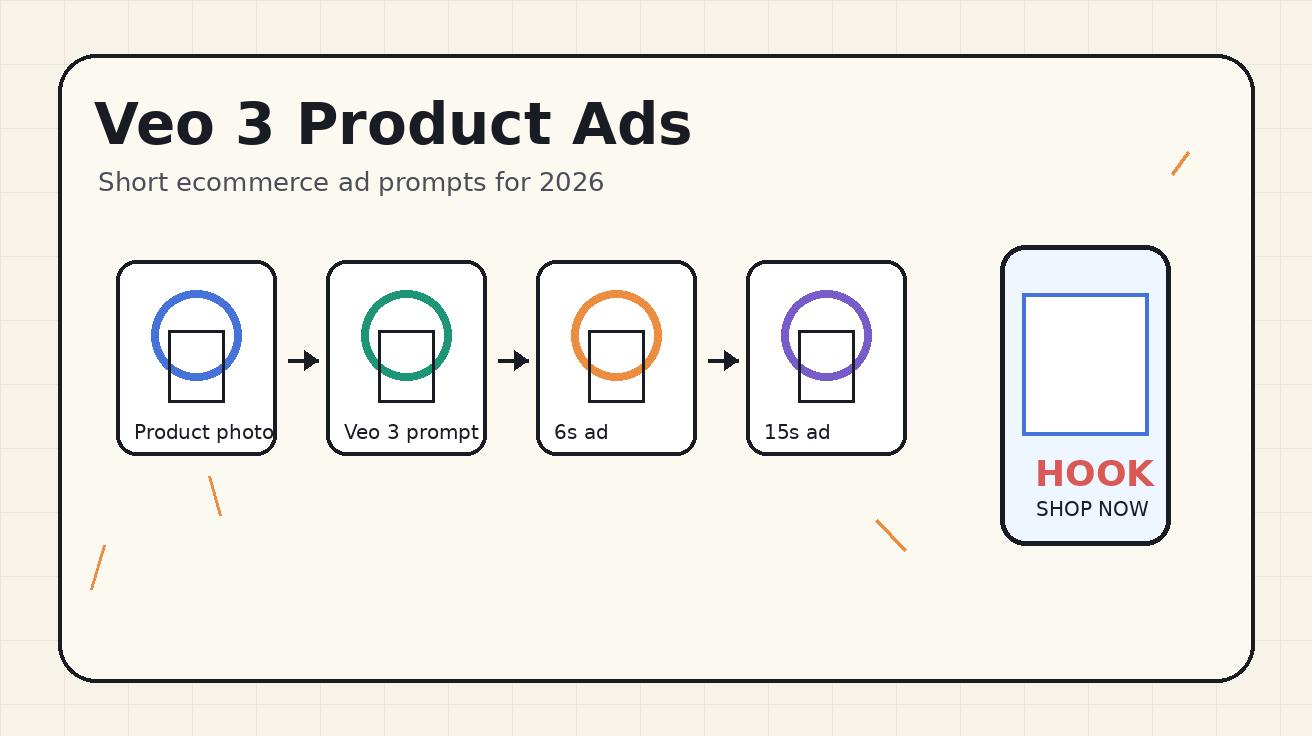
In the 2026 ecommerce landscape, the distinction between a video that explains and a video that sells is the difference between a bounce and a conversion. This guide provides a practical production framework for VeoNano, focusing on high-performing ad structures that turn SKU briefs into scroll-stopping assets.
The Core Difference: Product Videos vs. Product Ads
A standard product video is educational—it explains features. A product ad, however, is designed to sell. This shift in intent must be reflected in your VeoNano prompts. While a video might wander through technical specs, an ad must prioritize the "Product Truth" and the immediate benefit to the audience.
The VeoNano Ecommerce Prompt Formula
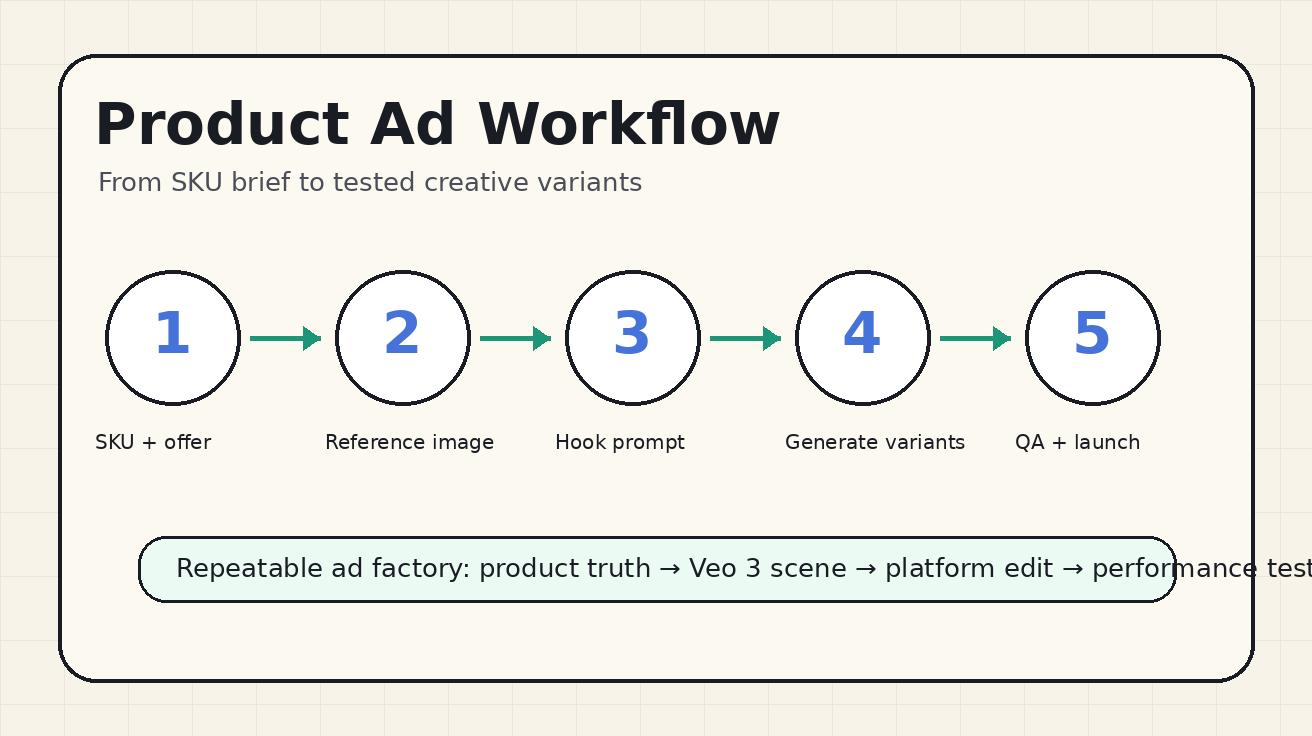
To generate consistent results, move away from generic requests. Use this structured formula for every prompt: Product Truth + Target Audience + Visual Hook + Scene Setting + Action + Camera Movement + Lighting Style + Format + CTA + Restrictions.
By defining these parameters, you reduce random editing loops and ensure the AI understands the specific aesthetic requirements of your brand.
Mastering the 6-Second "Bumper" Ad
The 6-second format is the workhorse of paid social and retargeting. Because time is limited, focus on a single, powerful idea rather than the entire product line.
- 0-1s: Visual problem hook.
- 1-3s: Product entry and solution.
- 3-5s: The benefit or result.
- 5-6s: Hero shot and CTA.
This structure is ideal for visually driven categories like skincare, jewelry, and tech accessories where the product's appearance is a primary selling point.
The 15-Second "Cold Audience" Framework
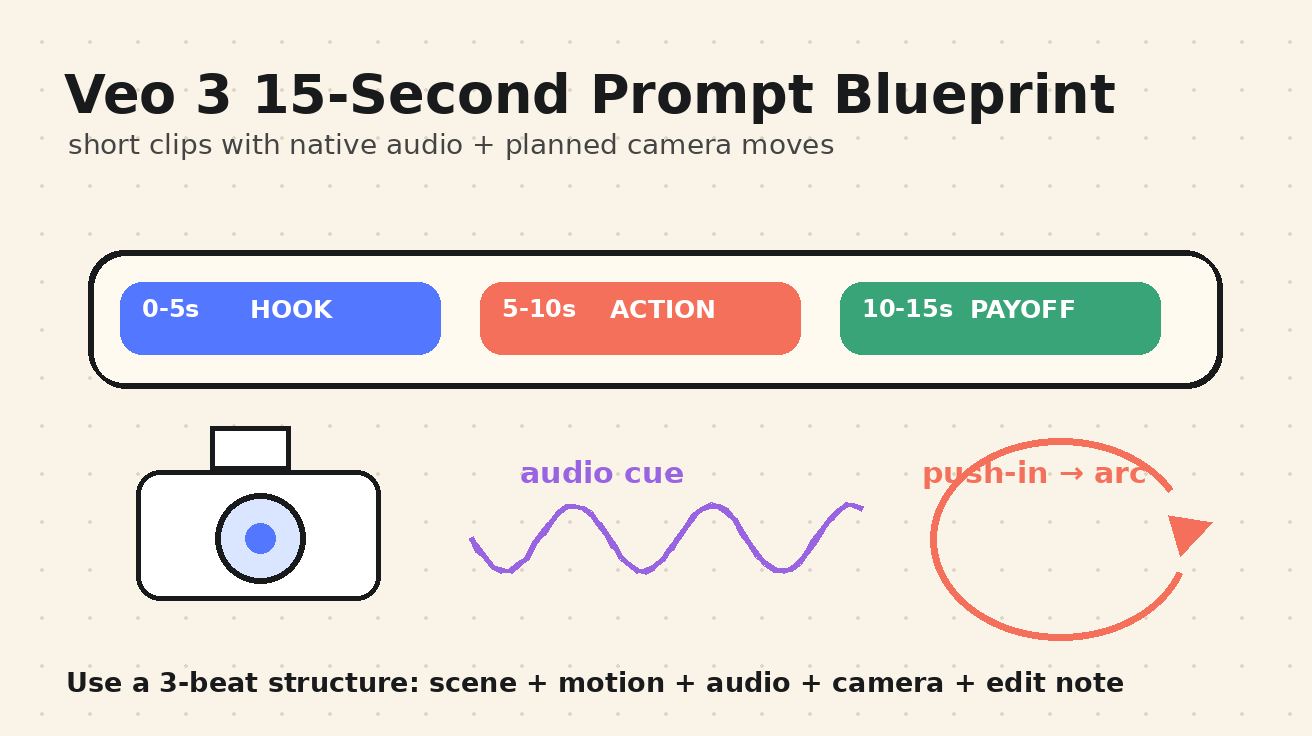
For new customers, a 15-second ad provides the necessary space to teach and sell simultaneously.
- The Hook (0-2s): A visual interruption that stops the scroll.
- The Demo (2-7s): Show the product in active use.
- The Proof (7-11s): Highlight texture, fit, or a before/after comparison.
- The Close (11-15s): Product lineup, color variants, and a clear shop prompt.
Shot Lists and Visual Hooks
Instead of asking the AI to "make an ad," provide a specific shot list. For ecommerce, the "Product Hero" shot is essential: use language like "clean hero composition," "packaging visible," and "accurate proportions."
Hooks must be visual-first. While text overlays help, the very first frame should communicate the value proposition without needing a single word of copy.
QA Checklist and Compliance
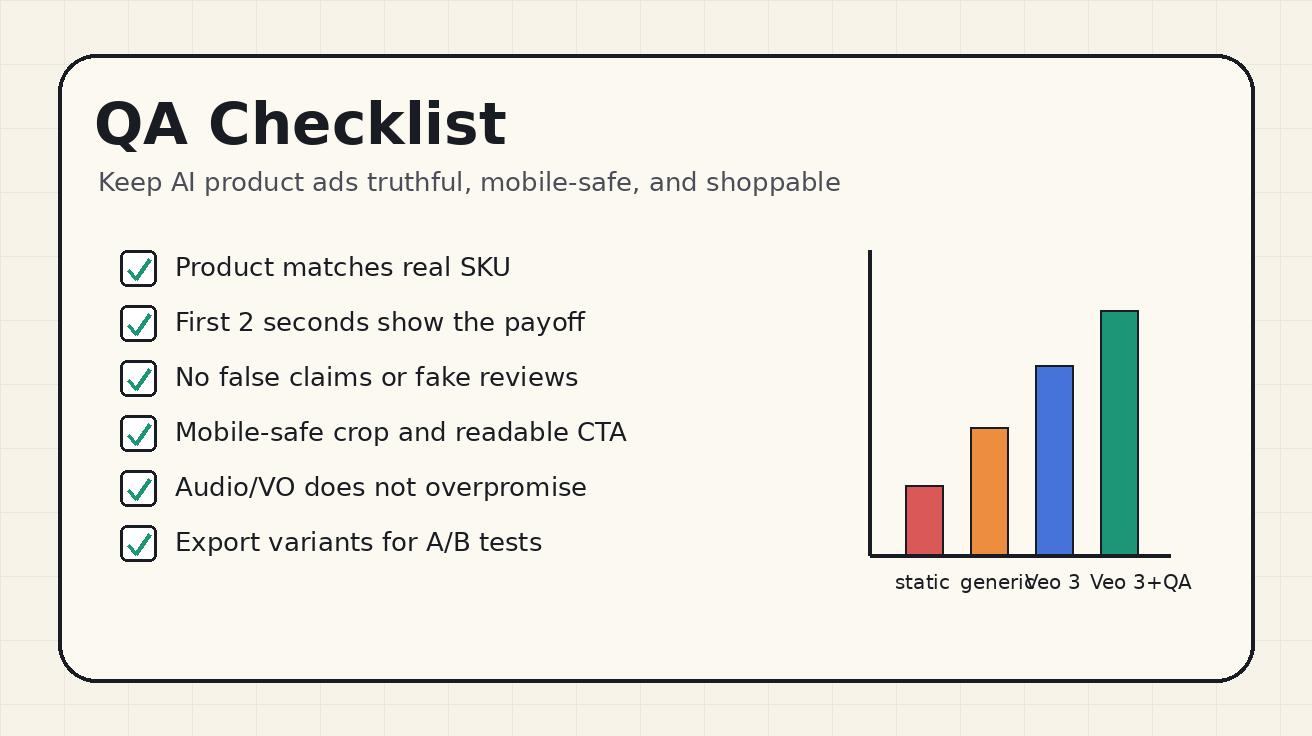
Before publishing your VeoNano creations, run through this quality check:
- Visual Accuracy: Does the product look like the real-world SKU?
- Claim Compliance: Avoid "miracle" or "guaranteed" claims unless substantiated.
- Clutter Control: Ensure the background doesn't distract from the product.
- CTA Clarity: Is the final frame a clear invitation to act?
Practical Weekly Workflow
- Select Structures: Choose between 6-second or 15-second formats based on your campaign goal.
- Draft Prompts: Apply the formula to your specific product SKUs.
- Iterate: Generate variants and refine the lighting or camera movement.
- Measure: Deploy and track which visual hooks drive the highest click-through rates.
Conclusion
Scaling ecommerce content requires standardization. By using stable structures and repeatable prompt formulas, you can move from a single SKU brief to a finished ad suite in a fraction of the time.
Next Step
Explore professional AI video workflows at veonano.com.
FAQs
1) Can this workflow work for a solo creator?
Absolutely. By using these templates, a solo creator can maintain the production volume of a full agency.
2) How many variants should I test?
Start with 2 to 4 variants per product to identify which visual hook resonates best with your audience.
3) Should I prioritize trends or consistency?
While trends can offer short-term reach, a consistent visual system builds long-term brand recognition and trust.
Media References
- https://cdn.veonano.com/blog/veo-3-product-ads-video-generator-2026/20260505072105-dg887rc9.jpeg
- https://cdn.veonano.com/blog/veo-3-product-ads-video-generator-2026/20260505072106-7z0pymca.jpeg
- https://cdn.veonano.com/blog/veo-3-product-ads-video-generator-2026/20260505072107-73xzu1h9.jpeg
- https://cdn.veonano.com/blog/veo-3-product-ads-video-generator-2026/20260505072108-ahlxvlaw.jpeg