The landscape of generative video has shifted dramatically in 2026. At VeoNano, we are tracking the head-to-head battle between Western tech giants and emerging Chinese powerhouses. The most significant rivalry today is between Google’s Veo 3 and MiniMax Video (internationally known as Hailuo AI).
This guide breaks down how these models differ in physics, realism, and creative philosophy to help you choose the right tool for your production workflow.
What is Veo 3?
Veo 3 is the latest evolution of Google’s video generation research. Launched as the successor to Veo 2, it represents the pinnacle of Google’s work in computer vision and natural language processing.
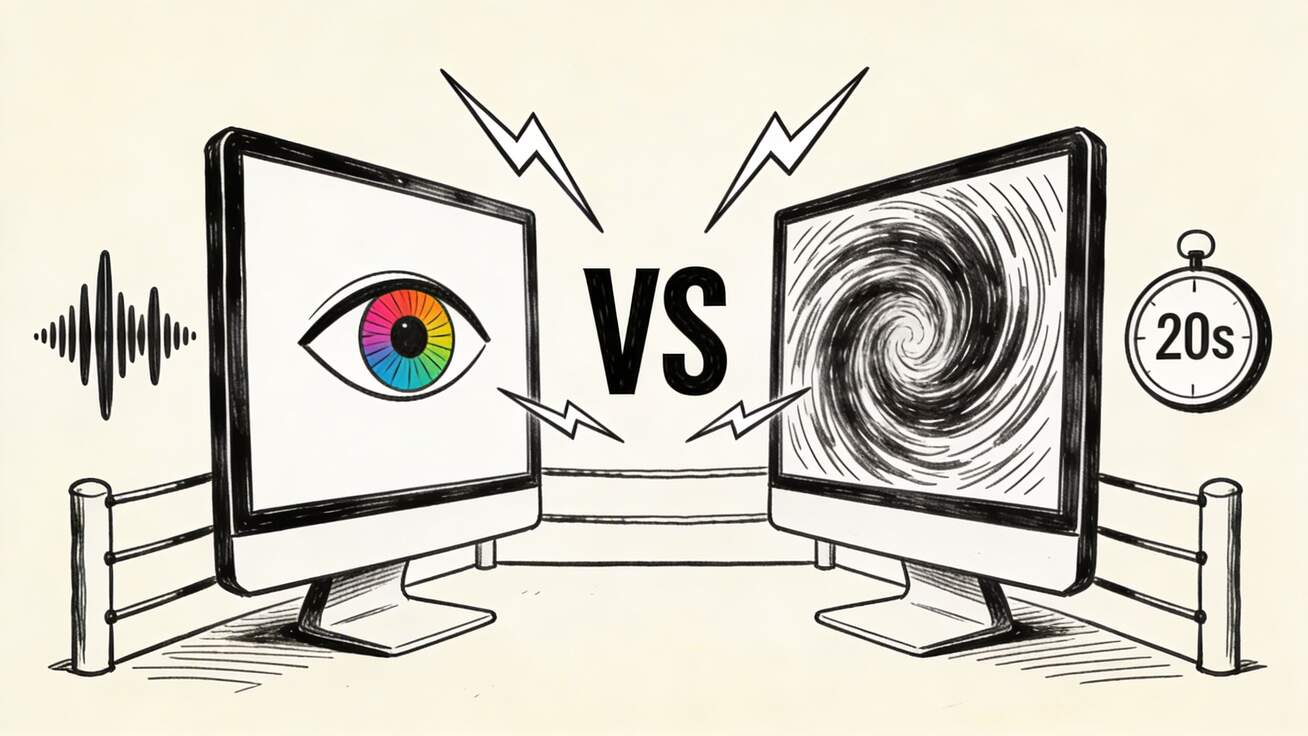
The model is designed for cinematic output, capable of generating high-fidelity 8-second clips from simple text prompts. What sets Veo 3 apart is its deep integration of responsible AI practices, including robust content filtering and invisible watermarking to ensure ethical content creation.
What is MiniMax Video (Hailuo AI)?
Hailing from one of China’s top AI firms, MiniMax Video—marketed globally as Hailuo AI—has become a formidable competitor to Western models like those from OpenAI and Google. Since its rise in late 2024, it has gained a massive following for its "unfiltered" creative potential.
MiniMax prioritizes motion coherence and creative flexibility. Unlike Google's more conservative approach, Hailuo AI offers creators more freedom, making it a favorite for those who need high-energy, dynamic visuals without strict guardrails.
Veo 3 vs MiniMax Video: Feature Comparison
While both models produce professional-grade results, they serve different creative needs:
| Feature | Veo 3 (Google) | MiniMax (Hailuo AI) |
|---|---|---|
| Max Duration | 8 Seconds | Varies (High Coherence) |
| Primary Strength | Photorealism & Lighting | Dynamic Motion & Speed |
| Safety Focus | High (Watermarking/Filters) | Moderate (Creative Freedom) |
| Physics | Superior Simulation | High Motion Coherence |
Video Quality and Visual Fidelity
When comparing visual output, the two models excel in distinct categories.
Veo 3 is the industry leader in photorealism. Google’s model displays a sophisticated understanding of lighting physics and material properties. If you are generating professional human portraits or scenes where light must interact naturally with surfaces, Veo 3 is the superior choice.
MiniMax Video, conversely, leans into visual interest. While it may occasionally lack the clinical photorealism of Google, it compensates with dynamic compositions. In blind tests throughout 2025 and 2026, users often preferred MiniMax for stylized or high-action content, while choosing Veo 3 for "real-world" accuracy.
Realism and Physics Simulation
One of the hardest hurdles for AI is maintaining realistic physics—ensuring gravity, object collisions, and fluid movements look natural.
Veo 3 utilizes Google’s massive compute power to simulate these interactions with high precision. Objects have weight, and camera movements feel grounded. MiniMax focuses more on "motion coherence," ensuring that a character's appearance doesn't morph or glitch during complex movements, even if the physics are slightly more "cinematic" than strictly realistic.
Pricing and Accessibility
Accessibility remains a key differentiator. Google’s Veo 3 is often tied to the broader Google Cloud and Workspace ecosystem, emphasizing security for enterprise users. MiniMax has focused on rapid deployment and speed, catering to independent creators who need fast iterations and fewer restrictions on their prompts.
Which Should You Choose?
- Choose Veo 3 if: You require absolute photorealism, strict adherence to safety standards, and videos that look like they were shot on a professional film set.
- Choose MiniMax (Hailuo AI) if: You need dynamic motion, creative flexibility, and a tool that prioritizes speed and "visual flair" over strict physical accuracy.
Frequently Asked Questions (FAQ)
Which model is better for human faces?
Veo 3 generally wins for realistic human portraits due to its superior skin texture and lighting simulation.
Is Hailuo AI safe for commercial use?
While it offers more creative freedom, users should be aware that it has fewer content guardrails than Google’s Veo 3. Always check the latest licensing terms on their respective platforms.
Can I use these models within a professional workflow?
Yes. At VeoNano, we recommend using Veo 3 for high-end B-roll and MiniMax for social media content that requires high engagement and movement.
Conclusion
In 2026, the choice between Veo 3 and MiniMax Video comes down to your production goals. Google offers a refined, safe, and hyper-realistic environment, while MiniMax provides a fast, dynamic, and flexible alternative. By standardizing how you use these tools, you can scale your content output without sacrificing quality.
Explore more AI video strategies at VeoNano.