
Categories: AI Video Workflow, Creator Strategy, Production Process
Tags: veonano, ai creation studio, ai video workflow, content strategy, creator toolkit
Overview: Two Giants of AI Video Generation
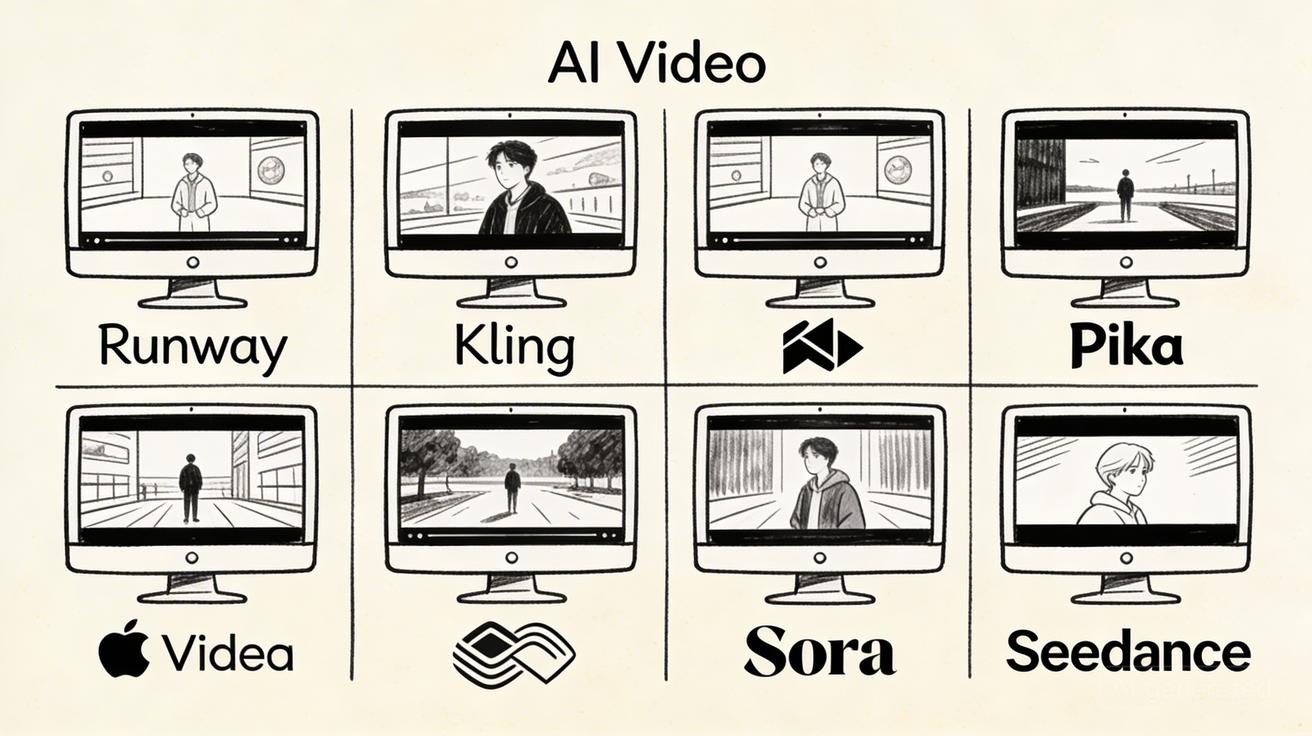
The landscape of AI video in 2026 is defined by the competition between Google's Veo 3 and Runway’s Gen-4. While both platforms offer groundbreaking capabilities, they cater to different creative philosophies. Veo 3 focuses on hyper-realistic output and deep integration with the Google ecosystem, whereas Runway prioritizes the granular control and speed required for rapid professional iteration.
Video Quality and Realism
Veo 3 has set a high bar for cinematic realism. The model is engineered to produce footage that is often indistinguishable from high-end camera work. It excels at rendering complex textures, natural lighting, and fluid human movement. For creators at VeoNano, this means a reduction in the need for heavy post-production color grading or texture overlays, as the raw output often achieves a "final-cut" look immediately.

Prompt Understanding and Control
The two platforms diverge significantly in how they interpret user intent:
- Veo 3: This model is a powerhouse for complex, descriptive prompts. It accurately translates dense architectural details or specific cinematic lighting instructions into visual reality. It is the preferred choice when the vision is clear and needs to be executed with high fidelity from a single text block.
- Runway Gen-4: Runway emphasizes "controllability." Rather than relying solely on text, Gen-4 offers multiple input modalities—such as motion brushes and camera control tools—allowing creators to direct the scene with surgical precision.
Speed and Generation Times
In a professional production environment, time is the most valuable currency.
- Veo 3 Performance: Currently, Veo 3 generates a standard 5-8 second clip in roughly 3 to 8 minutes. While the quality is superior, the wait times can slow down the creative flow, especially for longer clips up to 60 seconds.
- Runway Gen-4 Performance: Runway is the clear winner for speed. With clips generating in just 60-90 seconds, it allows for the rapid prototyping and "fail-fast" iteration cycles that modern digital agencies require.
Pricing and Access Models
Accessing these tools requires different financial commitments. Veo 3 is primarily available through Google’s Vertex AI. While it offers a free tier for experimentation, high-volume enterprise use can become costly, though it remains competitive for large-scale studio operations.
Runway utilizes a credit-based system. The "Pro" tier is widely considered the sweet spot for independent creators, providing a balanced volume of credits for high-resolution production without the overhead of enterprise-level contracts.
API Access and Integration
For developers and studios looking to build custom tools on top of these models:
- Google (Veo 3): Integration happens via the Vertex AI API, which is built for enterprise-grade stability and security.
- Runway: Offers a dedicated API specifically designed for creative workflows, making it easier to plug into existing video editing suites and production pipelines.
The Verdict: Which Should You Choose?
The choice depends on your specific project needs. If your goal is to produce a high-fidelity cinematic short where every frame must look like a million-dollar production, Veo 3 is the superior tool. However, if you are working on social media content, advertising, or projects requiring dozens of iterations per day, Runway Gen-4’s speed and control tools make it the more practical choice.
At VeoNano, we recommend a hybrid approach: use Runway for storyboarding and rapid iteration, then move to Veo 3 for the final high-resolution assets.
Frequently Asked Questions
1) Can these tools replace a traditional film crew?
They are powerful supplements that reduce the need for stock footage and expensive location shoots, but they still require a skilled "AI Director" to guide the output.
2) Which platform is better for long-form content?
While both can generate longer clips, Veo 3’s consistency over 60 seconds is currently leading, though Runway’s speed makes it easier to stitch together multiple shorter clips.
3) Is there a way to try these for free?
Both platforms offer limited free tiers or trial credits, though these are best used for testing basic prompts rather than full production work.
Next Step
Optimize your creative output by exploring VeoNano workflow templates.