Categories: AI Video Workflow, Creator Strategy, Production Process
Tags: veonano, ai creation studio, ai video workflow, content strategy, creator toolkit
The Big Picture
The landscape of generative video has shifted dramatically in 2026. This comparison comes down to a simple tradeoff: Veo 3 wins on accessibility, value, and native audio, while Sora 2 still stands out when you need longer clips and stronger handling of dense prompts.
If your day-to-day work is short-form marketing, social content, or fast iteration, Veo 3 is usually the better fit. If you are producing longer narrative sequences and can justify a much higher entry price, Sora 2 becomes easier to defend.
Audio: The VeoNano Advantage
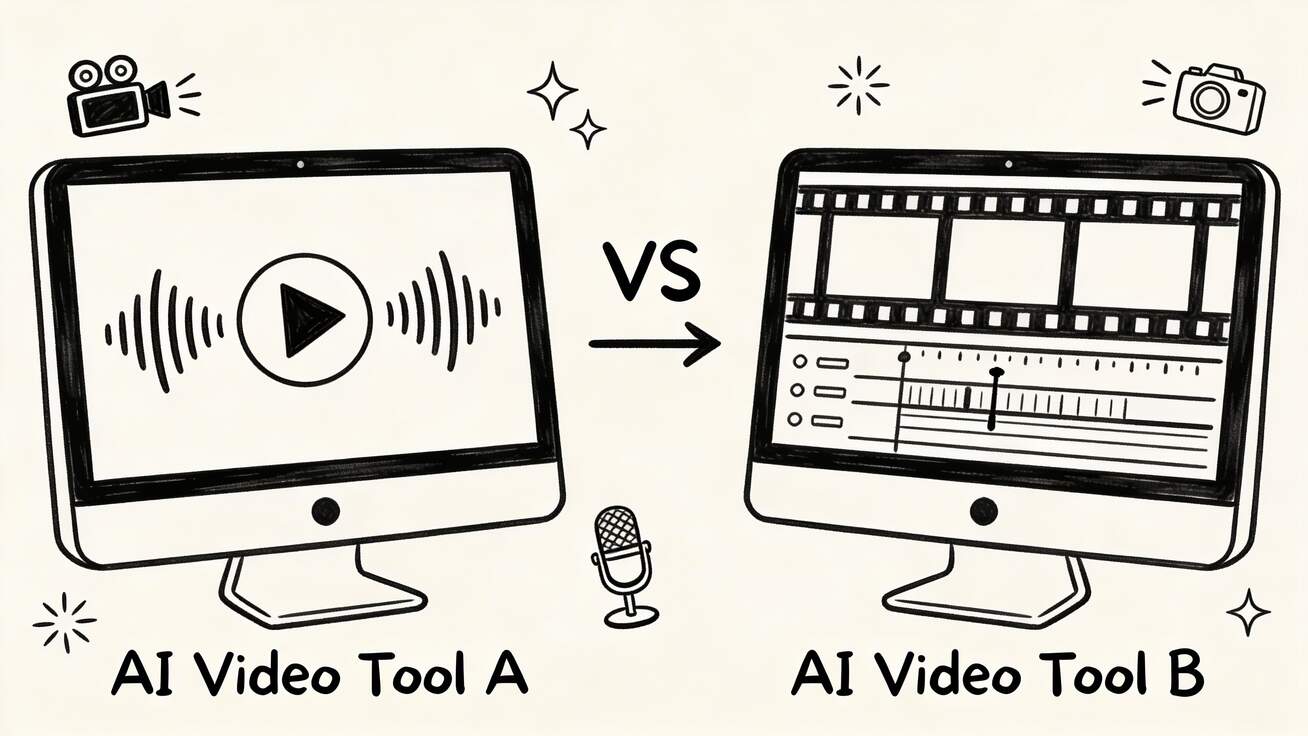
The most significant differentiator in this matchup is sound. Veo 3 comes equipped with native audio generation, a feature that sets it apart from Sora 2. This allows creators to generate audio-ready clips that feel like finished products immediately. For social media managers and marketers, this eliminates the extra step of sourcing ambient tracks or foley, significantly speeding up the workflow.
Clip Length and Narrative Flow
Sora 2 holds a distinct advantage for creators focused on storytelling. With the ability to generate clips up to 20 seconds long—2.5x the duration of Veo 3’s 8-second limit—Sora 2 provides the "breathing room" necessary for complex product demos or cinematic sequences. Longer clips mean fewer cuts in post-production and a more cohesive narrative flow.
Price: Not Even Close
Pricing is where this comparison becomes much less balanced. According to the reference article, Veo 3 can be accessed through a free tier in Google AI Studio with limited daily usage, and pay-per-use access is available through Vertex AI at roughly $0.05 per second.
Sora 2, by contrast, is positioned behind ChatGPT Pro at $200/month with no true free tier. That does not automatically make Sora 2 a bad tool, but it does mean the bar for value is much higher. If you do not specifically need 20-second generations and better prompt adherence on long scenes, the price gap is hard to justify.
Quality and Performance Head-to-Head
When it comes to visual fidelity, the competition is a dead heat, though each model has specific strengths:
- Photorealism: It’s a tie. Both models produce stunningly realistic visuals. Veo 3 tends to offer superior lighting setups, while Sora 2 excels in fine texture details.
- Motion Quality: Veo 3 takes the lead here. Its camera movements feel more natural and cinematographic, avoiding the "AI-ish" jitter sometimes found in Sora 2.
- Character Consistency: Sora 2 wins on endurance. It maintains character features more reliably over its 20-second duration.
- Prompt Adherence: Sora 2 is more adept at following complex, multi-layered instructions. Veo 3 may occasionally simplify or overlook specific elements in highly detailed prompts.
Real-World Use Cases
- Social Media & Ads: Veo 3 is the winner. The combination of free access, 8-second clips, and built-in audio fits TikTok, Reels, and Shorts especially well.
- Educational Content: Sora 2 wins. The longer clip lengths and precise prompt adherence reduce the number of cuts needed in explainer-style sequences.
- Product Marketing: Veo 3 has the edge when ambient sound and a faster path to publish matter more than clip duration.
- Cinematic Projects: Sora 2 is stronger for scenes that need more narrative development inside a single generation, while Veo 3 remains excellent for short, high-impact shots.
The Third Path: Seedance 2.0
For creators who find both models restrictive, Seedance 2.0 offers a powerful alternative. While Veo 3 and Sora 2 focus on prompt-to-video, Seedance 2.0 provides unmatched choreographic control through reference-to-video workflows, making it a top choice for daily usability and precise creative direction.
Conclusion: Which Should You Choose?
The "winner" depends on your wallet and your timeline. Veo 3 is the champion of value, offering a lower-friction entry point and production-ready audio. Sora 2 remains the tool of choice for teams that truly need longer durations and better execution on complex prompt stacks.
For most creators trying to scale output without ballooning costs, Veo 3 is the more practical default. If you want a streamlined way to work across modern AI video workflows, VeoNano gives you a simpler production path around those same creator needs.
Next Step
Explore professional AI video workflows at https://veonano.com, or jump straight into Veo 3 tools on VeoNano.
FAQs
1) Is Veo 3 actually free to use?
It has a free-access path with usage limits through Google AI Studio. If you need more consistent volume, paid usage is available through Vertex AI.
2) Can I generate sound with Sora 2?
Not natively in the way Veo 3 does. Veo 3's key advantage in this comparison is synchronized audio generation inside the video workflow itself.
3) Which model is better for complex storytelling?
Sora 2 is generally better for storytelling due to its 20-second clip length and higher adherence to complex, multi-element prompts.
4) What is the biggest reason to choose Veo 3 instead?
For most creators, it is the combination of lower cost, easier access, and native audio. That mix makes Veo 3 much more practical for regular publishing workflows.